
Elon Musk is technically the “founder” of Tesla, according to the court's consensus. He deserves credit for Tesla's success, but it is true that he is no longer behind Tesla's main invention.
Although I am not a fan of Elon Musk, I care more about the truth than smearing him, which is not the case with most of his haters. One of their go-to lies they like to repeat is that he is not the “founder” of Tesla.
It's something they use to try to discredit his success: “He's not an innovator or an inventor. He just buys ideas from others.”
While there is some truth to it, it is not the whole truth. I felt it would be important to set the record straight.
Tesla's first story
Tesla was officially incorporated on July 1, 2003, by Martin Eberhard and Marc Tarpenning with the goal of creating an electric car manufacturer that was also a technology company – an idea that remains central to Tesla today.
In terms of investment, Eberhard and Tarpenning's first Tesla set a goal of developing core technologies related to “battery, computer software, and a proprietary engine.” This is still Tesla's core technology today.

But Tesla's most important innovation was the use and packaging of cylindrical li-ion battery cells, previously used mostly in consumer electronics, such as laptops, in large battery packs for electric vehicles.
That was truly a game changer and an idea that preceded Elon Musk's involvement with Tesla.
When it was put together in 2003, Eberhard and Tarpenning had been working on the idea for a while. They previously founded NuvoMedia when the two founders created a handheld device, the Rocketbook, an ebook reader, back in 1996.
They sold the company in 2000, but before that, they were working on the next generation of their ebook and in finding batteries, they noticed a dramatic improvement in the capacity and cost of li-ion battery cells.
The two engineers were particularly concerned about climate change and oil imports. They did the math and concluded that powering transportation with batteries that use renewable energy would have a significant impact on reducing pollution and climate change.
Tesla did not invent electric cars. They were 100 years old when the company was founded, but they needed to make a compromise compared to gasoline-powered cars, which prevented them from becoming popular.
That was Tesla's difference maker: making cars with the latest li-ion battery cells optimized for consumer electronics, leading to electric cars without compromise.
This core idea is reflected in Eberhard's guiding principles for Tesla:
1) An electric car should not be a compromise. With the right choice of technology, it is possible to build electric cars that are actually better cars than their competition.
2) Battery technology is the key to a successful electric vehicle. Lithium ion batteries are not only suitable for automotive use; they change the game, making decent driving distance a reality.
3) If designed correctly, electric cars can appeal to even the most serious car enthusiast, as electric drives can greatly improve internal combustion engines.
That has been the basis of Tesla's success. The idea was to use the amazing progress with li-ion batteries in the 1990s to deliver electric vehicles without compromise.
But an idea is useless without execution.
Tesla would not have happened without Elon Musk
Musk says his interest in electric cars predates Tesla. There is no reason not to believe him, but there is no evidence that he was involved in the above-mentioned concept.
In fact, before joining the Silicon Valley internet startup, Musk went to Stanford University to study supercapacitors, which he says he did with the hope of using them in electric cars. This would suggest that he thought that supercapacitors would be the future of EVs instead of Li-ion batteries.
Musk and Tesla teamed up for a company called AC Propulsion.
AC Propulsion pioneered the electric car renaissance and built the tZero electric sports car in the 1990s.
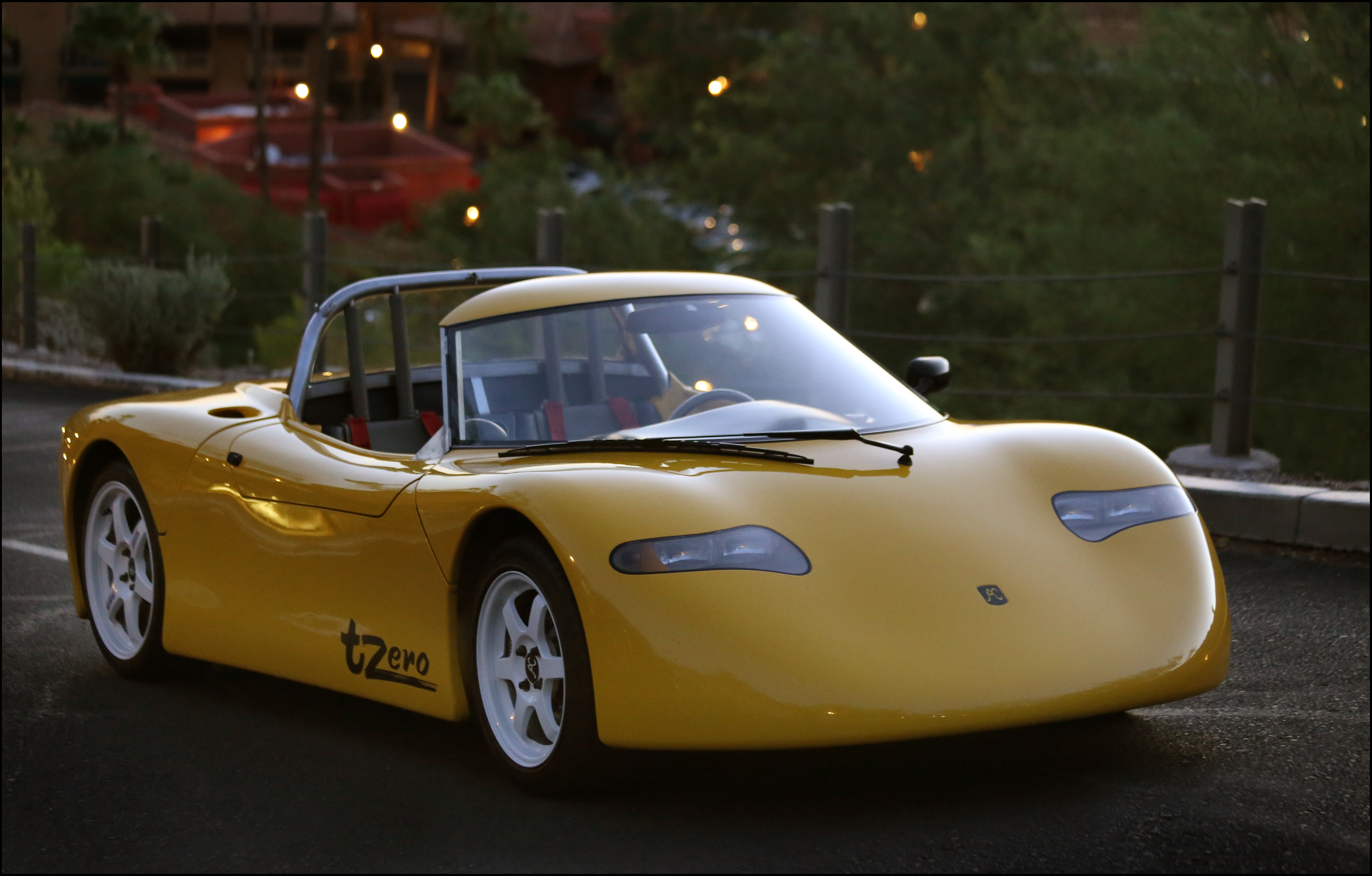
At first, it used lead-acid batteries like its predecessors, but the company switched to lithium-ion battery cells in the early 2000s. It's not clear who had the idea first or if it was the same idea, but we do know that AC Propulsion and Eberhard were connected during the conversion.
Eberhard tried to convince AC Propulsion to trade in the new tZero, but the company refused because it was focused on another product. It was then that Eberhard and Tarpenning decided to launch Tesla.
How did Musk get into the picture?
Musk, who was working at SpaceX at the time, was contacted by JB Straubel, a young electrical engineer with a long-time interest in electric vehicles, including building his own Porsche EV in his garage.
Fresh out of school, Straubel was working on a then-advanced hydrogen-powered airplane—something Musk was interested in, so they met. The conversion eventually focused on electric vehicles, and Straubel, deeply connected to this small world, introduced Musk to AC Propulsion.
They tested the tZero with lithium-ion batteries, and Musk was sold. Like Eberhard, he tried to convince AC Propulsion to commercialize the product. Tom Gage, the CEO of AC Propulsion, also refused, but since they were thinking in the same way, he connected Musk with Eberhard, who had just launched Tesla and Tarpenning, and Ian Wright, who had joined the two engineers.
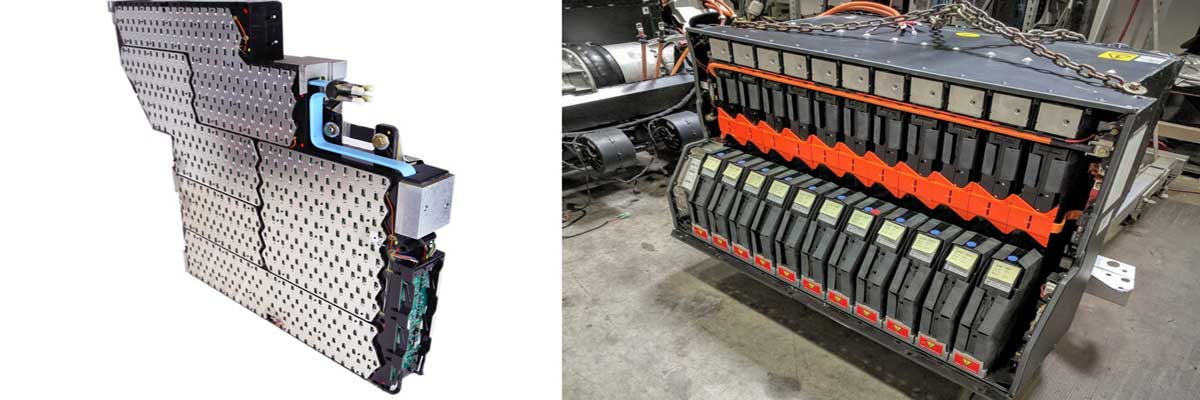
A few months later, in February 2004, Musk led Tesla's series A investment round, with $6.5 million of $7.5 million coming out of his pockets.
Eberhard became CEO, and JB Straubel, who, despite his young age, had extensive experience in building electric vehicles, joined as Chief Technology Officer.
Musk was busy with SpaceX, but he was more active within Tesla than just an investor and board member.
As Tesla worked on the Roadster, Musk led several other funding rounds, providing a large portion of the funding himself.
Things got worse in 2007. Tesla had problems bringing the Roadster to production within its budget. The move to use the chassis of the Lotus Elise proved to be a mistake, and in the end, the Tesla Roadster shared only 6% of its parts with the Elise, as most of them had to be reused.
In the summer of 2007, the board, chaired by Musk, asked Eberhard to step down. Several interim officials followed before Musk took over in 2008.
Eberhard left the company permanently, and in 2009, he sued both Tesla and Musk for firing him. Both sides blame each other for being behind Tesla's problems, and Eberhard said Musk was “rewriting history” as if he had founded Tesla himself.
In the end, the judge dismissed part of Ebarhard's case, and the two sides settled and agreed that five people can call themselves the founders of Tesla: Eberhard, Tarpenning, Wright, Musk, and Straubel.
Electrek's Take
Now, in a damages case like this, the result is very unfair. Usually, those with the most money and the best lawyers win.
Therefore, I will not say that there is no point in asking whether Elon is really the founder of Tesla or not. I get that there are exceptions here, but all parties involved have resolved the issue. My main point is that it doesn't really matter.
Tesla's main idea was to create an electric car without compromising on advances in lithium-ion battery technology. However, all evidence points to Musk not engaging with this core idea.
With that said, we need to give credit where credit is due. He saw it as a great idea and put more money into making it happen than anyone else was willing to do at the time.
So, you can make the argument that Tesla wouldn't have happened with Musk – which makes the founder argument explode.
After all, you also have to give some credit to Musk for Tesla's success. He has been the CEO since 2008 and the company has achieved amazing things under his leadership. They succeeded in mainstreaming EVs and pushed the industry to switch to battery-powered vehicles.
To this day, it was Musk's original 'Tesla Secret Master Plan' in 2006 that convinced me that Tesla would be the company to bring EVs into the mainstream. This strategy was logical, and it was carried out under his leadership. He took the original idea, put it together, funded it, and led the team that made it happen.
The last point is important because this is where I start to agree with Musk's detractors again. Musk's fans like to say that he is some kind of engineering genius. Jamie Dimon recently called him “our Einstein”. While I would agree that Elon is brilliant and has an above average understanding of many principles of physics and engineering, comparing him to one of the most influential theoretical scientists of all time is pure madness.
While Musk has made technological contributions to Tesla, I think they are often overblown by his fans and the Tesla team doesn't get enough credit. JB Straubel, Tesla's long-term Chief Technology Officer until 2019, and his teams deserve a lot of credit for the technical contributions and advances in battery technology and electric power that have made Tesla successful.
There are too many to name, but I've been reporting on Tesla for over a decade. According to my report, sources have credited people like Straubel, Drew Baglino, Kurt Kelty, Colin Campbell, Peter Rawlinson, Charles Kuehmann, Alan Clarke, Dan Priestley, Lars Moravy, David Zhang, Evan Small, and Franz von Holzhausen for their contributions to Tesla. .
In short, yes, it is correct to say Elon Musk founded Tesla. Yes, he had a key role in the company's survival and success, but I also think it's fair to say that he wasn't behind Tesla's main innovations, and the company's top talents don't get nearly enough credit for delivering the work.
The mission to accelerate the world's transition to sustainable energy has attracted many highly skilled people to Tesla.
Unfortunately, Musk's leadership over the past few years has led Tesla into that mission, which is my main concern about the company.
Regardless, I wanted to set the record straight about his role before he ruined his reputation and credibility.
FTC: We use auto affiliate links to earn income. More.