
Cargo bikes are a rare breed, filling the niche between small-storage e-bikes/scooters and larger cargo-specific models. But that lack of cargo scooters may be changing, based on several new models we've seen recently, including the recently launched Lightfoot electric scooter.
But unlike several other rolling stock motorcycles out there, the Lightfoot has one major advantage: its built-in solar panels keep it charged directly from the sun.
It's not the first solar-powered motorcycle we've seen, but it's certainly the most eye-catching model yet.
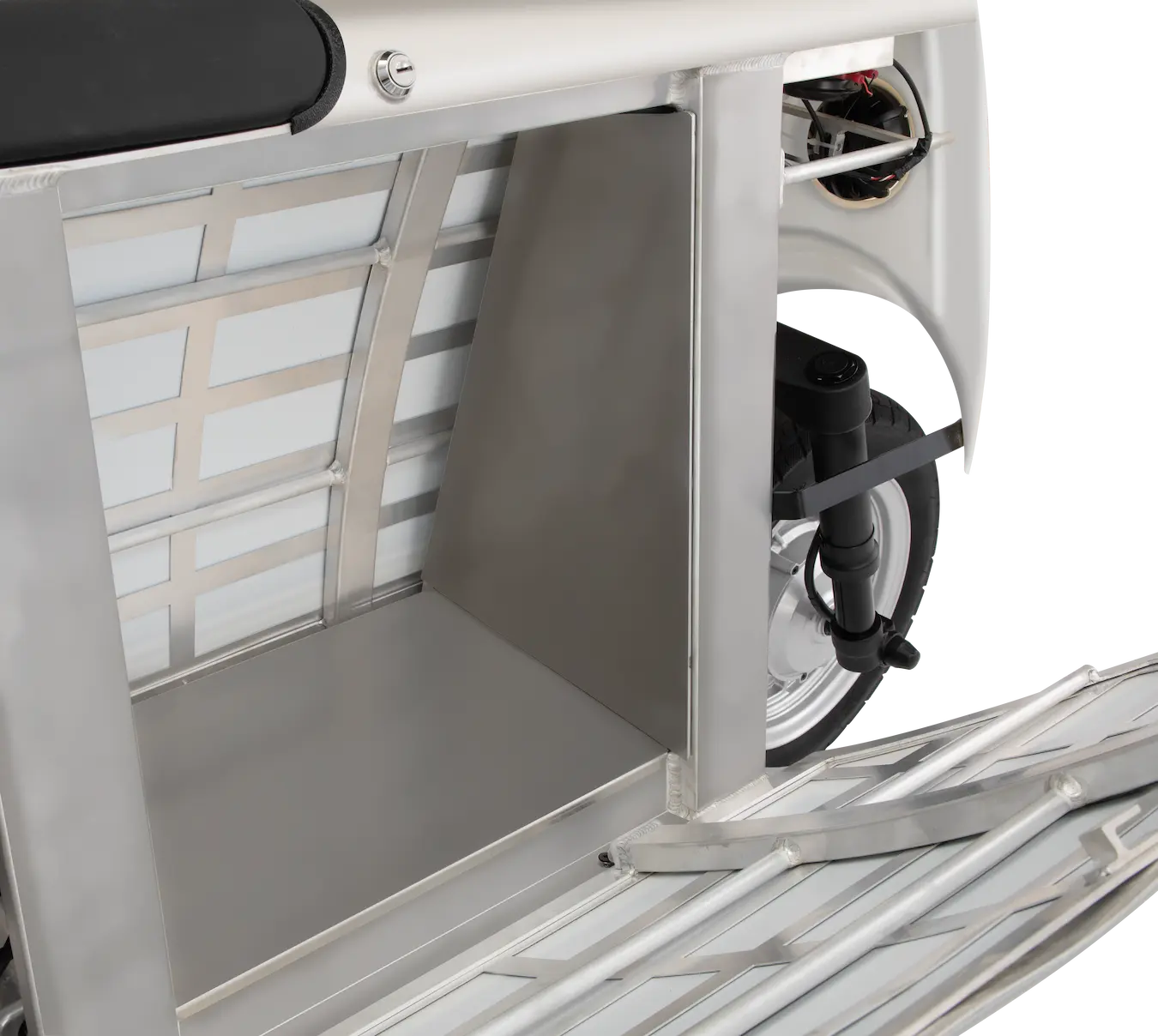
Developed by Otherlab, the Lightfoot electric scooter features 120W solar panels on both sides, hiding a 45.2 L (12-gallon) storage space. One panel is hinged, opening the entire side of the vehicle for easy access to luggage, then locks into place to keep it secure.
Also hidden by those panels is a large UL-certified 1.1 kWh battery and a 600W on-board charger (just in case you need to plug it into the grid for faster charging than you can get from solar panels) . In fact, the company claims an 80% charge can happen in just 90 minutes from a 110V wall outlet. Based on the company's calculations, it seems that solar charging can replenish the battery at a rate of about 7-8% per hour (about 3 miles or 5 kilometers of additional range per hour of sun exposure). That means heavy utility users will probably still rely on a wall plug from time to time, but there's nothing wrong with outdoor parking helping to extend the range.
The company rates the motorcycle's range at up to 37 miles (60 km) per charge and says an additional 30 km of range can be added per day from the solar panels.
That means the scooter can only be charged by the sun if it is used for light duty cycles, i.e. less than 18 miles (30 km) per day. As the company explained, “If you only need it a few times a day, put it in your driveway and it'll always be there for you. For many riders, we hope this means saying goodbye to plug-in charging altogether.”
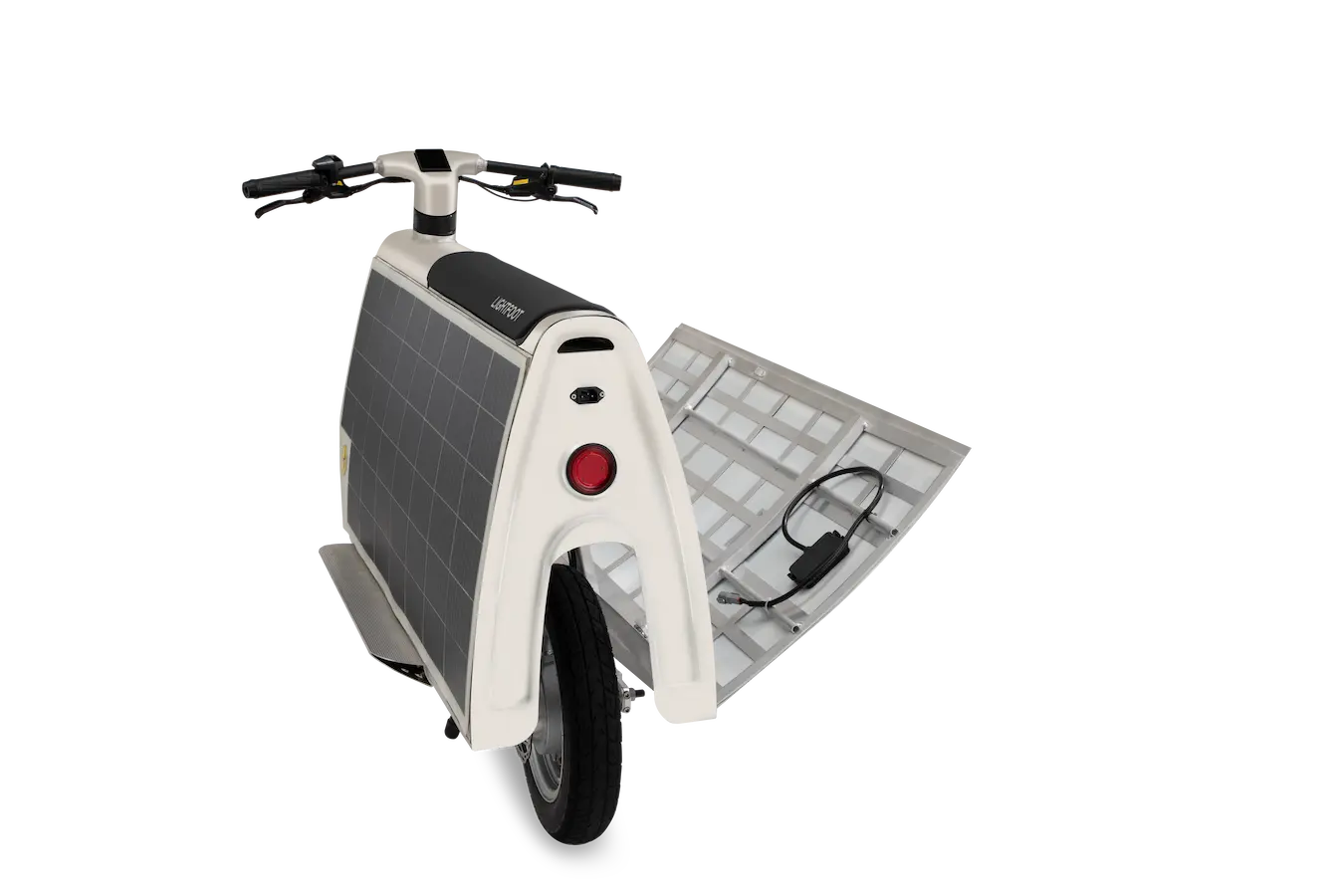
With a top speed of 20 mph (32 km/h), the scooter is declared “bicycle lane legal” without requiring additional licensing or registration.
The Lightfoot is also designed to be easy to work on with small mechanical parts. The dual motor system relies on hub motors instead of centrally mounted motors, meaning there are no chains or belts to deal with. Between those two motors rated at 750W (1 kW peak), the scooter should get up to speed very quickly while putting down nearly 2,000 watts of power.
The company offers a 1-year warranty on every scooter, with an even longer 2-year warranty on major components including the frame, engines, controls, brakes, lights, and front suspension. The scooter is also covered by an “ironclad buyback guarantee” where the company promises to buy back the scooter for any riders who are “unsatisfied with their purchase for any reason.”
Scheduled to begin delivery in January 2025, the Lightfoot is now available for purchase with an MSRP of US $4,995.
Electrek's Take
Look, I'm different here. My inner engineer is drooling over this thing, while my inner MBA is wondering how to sell it to a wider market than people like me. My two areas of expertise have often collided in the past, but this is the joy of high-end developers meets the beauty of ultra-niche.
Sure, I can 100% get the hell out of this. I've been riding it everywhere with no qualms about looks. But I'm probably not the best representative of the scooter customer as I tend to be on the technical side of the spectrum. So I hope Lightfoot can find a wider appeal than I fear it may be limited to.
Oh, and to all those who are ready to express the opinion that “THAT'S REALLY NOT THE MOST EFFICIENT WAY TO DO IT…”, I think that's missing the point. The whole idea here is not to maximize every photon, but rather to not spend enough sunlight that just bakes the paint on all the other scooters and gets thrown in there (and don't get me started on the linguistic purists) . Sure, you're probably only getting enough solar charge from one panel at a time, but why not maximize your chances of catching those rays whenever you can?
With all that said, I love this thing. I just wonder how many people will love it as much as I do.
FTC: We use auto affiliate links to earn income. More.